ESG Suite — Karma Metrix

Digital Sustainability

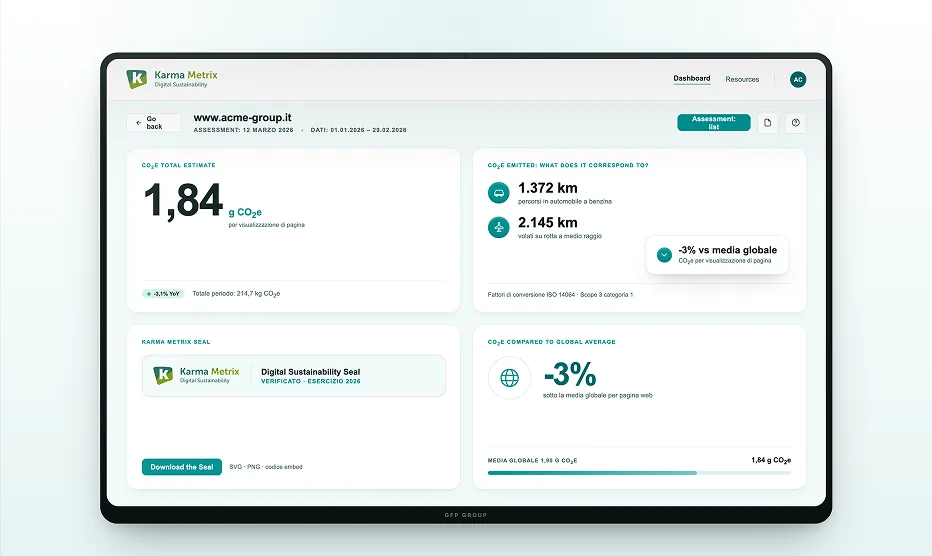
Karma Metrix quantifies the CO₂-equivalent emissions of your company's digital assets and guides you through a precise, transparent path of measurement, reduction, reporting and communication.

Karma Metrix dashboard showing the CO₂e emissions of digital assets
Digital Sustainability iconDigital SustainabilityESG Suite module

What is Karma Metrix

The patented pathway dedicated to digital sustainability

Karma Metrix is Green Future Project Group's brand dedicated to measuring and reducing the CO₂e emissions of corporate digital assets. Its measurement algorithm is patented.

Smartphone with the Karma Metrix logo
  • −35%average reduction in emissions caused by digital assets
  • +200kweb pages analysed by our patented algorithm
  • −10%average reduction in cloud costs

First step, free

How much impact does one of your web pages have?

Get a free analysis of one page of your company website: we measure CO₂e emissions per page view and send you the site's energy class, from A+ to E. No commitment, no implementation required.

We reply within two business days. The full audit then extends the measurement to every page of the site and to your other digital assets.

Scope 3 emissions reporting

An increasingly relevant part of your Carbon Footprint

Digital emissions fall under Scope 3, and are therefore part of an organisation's Carbon Footprint calculation. This is one of the most complex emissions categories to measure, and with the growing adoption of digital services and AI tools, the digital component is set to carry increasing weight among the indirect emissions to monitor.

Scope 1

Direct emissions

Sources owned or controlled by the company.

Scope 2

Indirect emissions from purchased energy

Purchased and consumed electricity, heat and steam.

Scope 3

Indirect emissions along the value chain

Includes digital emissions: sites, email, video calls, cloud and AI applications.

The impact of digital

How much digital weighs today

  • 3.7%of global greenhouse gas emissionsThe digital sector weighs more than civil aviation, which stops at around 2.5%.
  • 1.6 Bn tof CO₂e every yearThe highest estimate for the ICT sector in 2020 across devices, networks and data centres: the range runs from 0.69 to 1.6 billion tonnes.

Where it's heading

  • +12%every yearThe growth of data centres' electricity consumption worldwide, year after year, since 2017.
  • ×2electricity consumption by 2030Data centre consumption doubles to around 1,000 TWh, 3% of the world's electricity, driven by artificial intelligence.

Sources: The Shift Project, Lean ICT — Towards Digital Sobriety (2019); UNCTAD, Digital Economy Report (2024), estimate of 0.69–1.6 Gt CO₂e for 2020; IEA, Energy and AI and Electricity 2026. Literature figures, used to convey the order of magnitude of the phenomenon: a company's own figure is calculated on its real assets during the audit.

What we measure

We measure your company's digital assets

The audit covers the entire corporate digital perimeter: every asset is measured individually and traced back to total CO₂e emissions.

Analyses carried out through our platform

Continuous scanning, energy class from A+ to E, a publishable seal for your website and data ready for your sustainability report.

  • Websites
  • Intranet
  • Web platforms

Analyses managed by our team with a tailored advisory approach

Annual measurement on the company's real data, plus behavioural and technical best practices to reduce consumption and emissions.

  • Company email
  • Company video calls
  • Company chat
  • Cloud storage
  • Mobile App
  • AI applications

Why it matters

The benefits of digital sustainability

Measuring and reducing digital emissions produces effects that go beyond the environment: performance, productivity, marketing and reputation.

Digital efficiency and emissions reduction

Targeted interventions on the highest energy-impact assets: less CO₂e for the same service delivered.

Improved SEO and organic traffic

Lighter, faster pages improve Core Web Vitals and the site's organic ranking.

More efficiency and productivity for employees

Best practices on email, video calls and chat reduce consumption and time lost on poorly used tools.

New marketing levers

A verifiable certificate to showcase on digital channels at every stage of the journey.

Growth in branding and reputation

A measured and reported commitment, not just a declared one: something you can communicate to customers, investors and stakeholders.

Employee engagement and training

Concrete sustainability topics, tied to the everyday actions of every person in the company.

Our pathway

Measure, improve efficiency and invest

A continuous improvement pathway: we measure the impact of digital assets, act on the main sources of emissions, verify the results achieved and support voluntary investment in certified environmental projects.
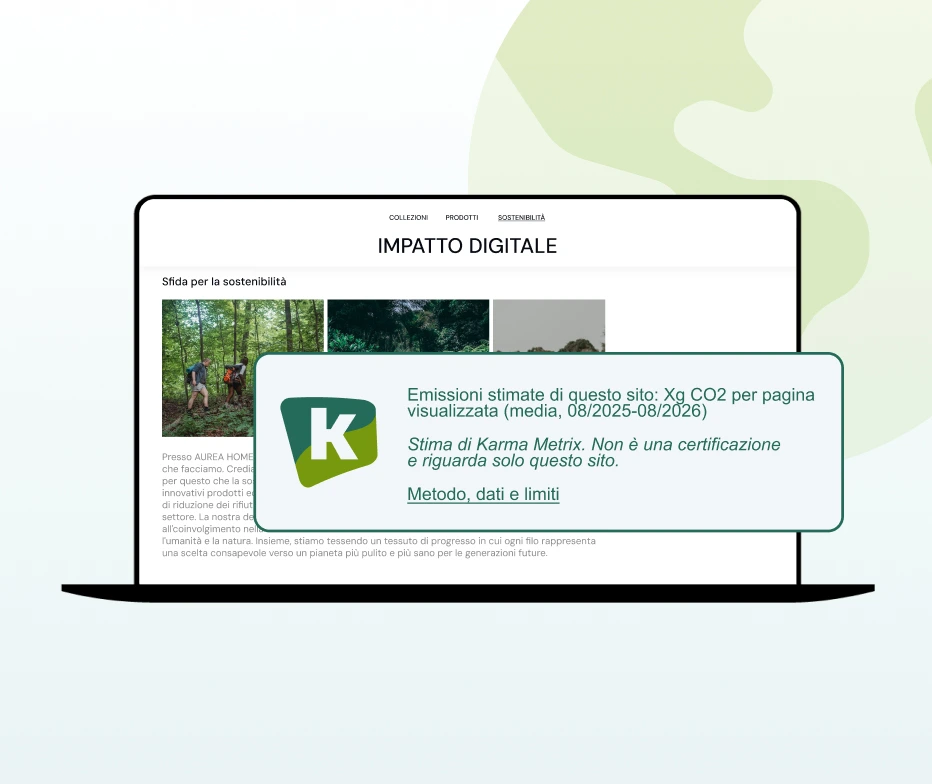
Mockup of a web page with the Karma Metrix badge showing the site’s estimated emissions per page view
01

Measure

We measure the CO₂e emissions generated by your digital assets and define their impact.

02

Improve efficiency

We identify the most energy-intensive elements and define concrete actions to reduce consumption and emissions.

03

Measure again

We repeat the measurement to verify the reduction achieved and monitor progress over time.

04

Invest

We invest in certified environmental projects to voluntarily contribute to emissions absorption.

Website Energy Optimisation

Not just a number, but a real action plan

We identify the elements with the greatest energy impact on your site and rank them by weight on emissions. The result is a report with a roadmap of concrete actions, described so your technical team can implement them without additional consulting.

On request, we extend the analysis to your main competitors' sites: you understand where you stand compared to them, with a measured and communicable figure.
  • Report with an action roadmap
  • Competitor benchmarking
  • Re-measurement to verify the result
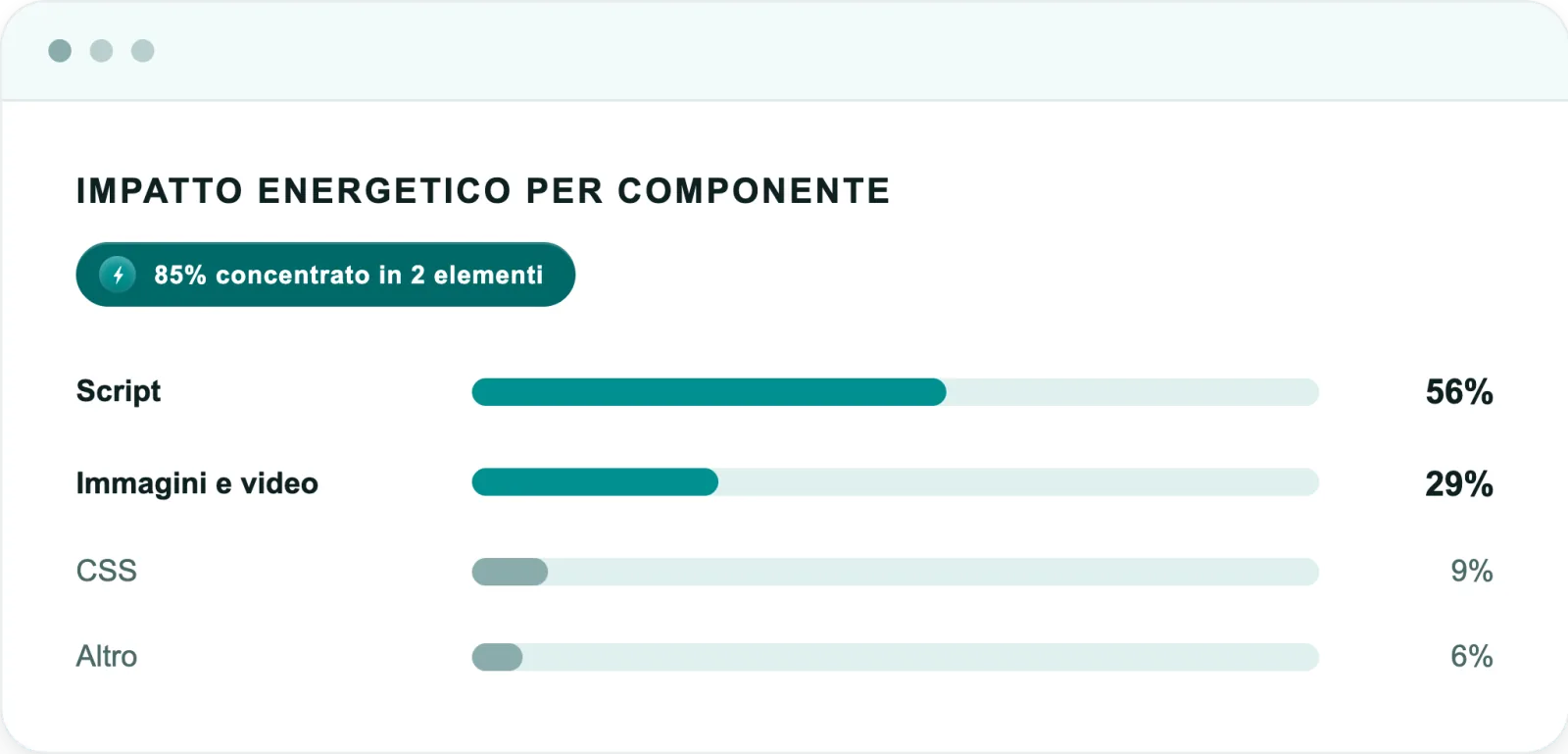
Energy impact report by component of a web page

Example breakdown of the energy impact on an analysed site: the top two items account for 85% of emissions, and that's where efficiency improvements start.

Case studies

Companies that have measured and reduced their digital emissions

The pathway applied to real digital assets, from measurement to communicating the result.

Golden Goose sneaker being wornSuite Digital Sustainability

GOLDEN GOOSE

Golden Goose monitors the emissions of WE.GOLDENGOOSE.COM with Karma Metrix, as part of a multi-year path to measure and reduce its digital impact.

Forbes article on Valentino and Karma Metrix on a tablet, with a Valentino fashion show in the backgroundSuite Digital Sustainability

Valentino

Valentino measured the impact of valentino.com, analysing over 11 million page views and identifying the site's most energy-intensive elements to define efficiency actions.

INAIL sign, the Italian National Institute for Insurance against Accidents at WorkSuite Digital Sustainability

INAIL

INAIL periodically monitors its digital emissions with Karma Metrix, extending the analysis from its website to its employees' workspace and, from 2026, to its app as well.

Bibanca logo, BPER Banca GroupSuite Digital Sustainability

Bibanca

BiBanca measured the emissions of its website with Karma Metrix, applying the guidelines when designing its new site and periodically monitoring its emissions to keep them low over time.

FAQ

Frequently asked questions

Answers to the most common questions about measuring and reducing digital emissions.

Digital sustainability means reducing the environmental impact of digital technologies and assets (websites, email, archives, software, infrastructure and devices) across their entire life cycle, without compromising quality and performance. The first step is to measure the greenhouse gas emissions associated with each asset, so as to set reduction targets and monitor results over time.
The emissions of a corporate website depend on traffic, page weight and hosting type. Karma Metrix measures and improves the efficiency of these emissions for websites, web platforms, intranets, apps, AI, cloud, storage, email, video calls and company chat.
A website's emissions are measured in gCO₂e per visit and depend mainly on the amount of data transferred: the weight of images and videos, CSS and JavaScript files, caching logic. The efficiency and energy source of the hosting, the network and users' devices also count.
Digital emissions fall under Scope 3 of the GHG Protocol: they must be reported when Scope 3 is material according to the double materiality assessment or relevant to the company's carbon footprint.
Most digital emissions fall under Category 1 – Purchased Goods and Services of the GHG Protocol, which covers hosting, cloud services and communication platforms purchased from external suppliers. If the digital service is part of the product sold to customers, it instead falls under Category 11 – Use of Sold Products.
Beyond reducing emissions, client companies see an average 10% reduction in cloud costs and improved organic SEO ranking, resulting in increased site traffic. Best practices on email, video calls and chat also improve employees' day-to-day operational efficiency, as confirmed by companies that have adopted them as policy.
At the end of the pathway the company can communicate the measured and verified emission reductions, stating methodology, scope and reference period. For residual emissions it can mention its voluntary contribution to certified environmental projects, without claiming neutrality or reduced impact on the basis of offsetting.
A single service (site, platform, app, cloud, email, video calls or chat) is delivered in about a month, with minimal operational effort required from the client. The cost depends on the size of the company, the number of digital assets to analyse and their complexity, such as site traffic or the volume of data in the cloud. For a detailed quote, request a free call.

Let's talk

Request a consultation on digital sustainability

Tell us about your company and your sustainability goals: one of our ESG experts will get back to you to identify the best starting point, with no commitment.

  • A 30-minute call with an expert, no commitment
  • We get back to you within 24 working hours
  • A first concrete direction for your ESG goals
This field is required.
Please enter a valid email.
This field is required.

No spam. Your data is processed in accordance with the GDPR.

Thank you, we will be in touch

We have received your request. An ESG expert from Green Future Project Group will contact you within 24 working hours.