Achieved
Pin

Marine Restoration

Posidonia reforestation at Portofino MPA
Context

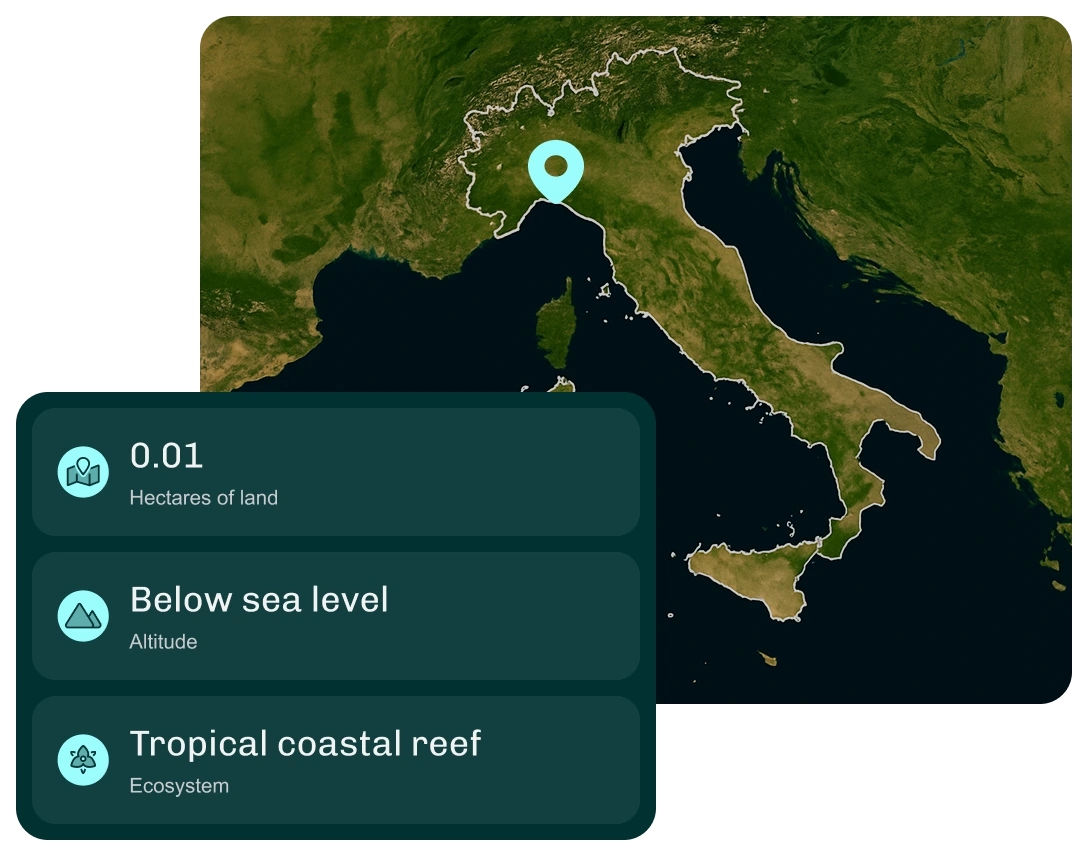
A project to restore Posidonia oceanica meadows in the Portofino MPA

Posidonia oceanica is a marine plant endemic to the Mediterranean. It forms extensive prairies and is one of the most important marine ecosystems, due to the multiple functions it performs: oxygen production, habitat for numerous species, coastal protection, wave mitigation and carbon dioxide absorption. In recent decades, there has been a severe degradation of its population, due to multiple human activities that have negatively impacted its balance. The Posidonia regeneration project at the Portofino Marine Protected Area Punta Pedale aims to support the natural restoration process by planting Posidonia cuttings within an area of 100m2.

Stakeholders and local partners

Who are the key stakeholders?

Posidonia is a strong species but its growth is very slow. Intervening with manual restoration measures means to help and to support this natural process, accelerating the identified project site rehabilitation. Posidonia seedling cuttings are taken from settling areas in which they accumulate with the movement of the sea; once collected, the seedlings are put in water and prepared for the planting phase. Preparation includes the removal of dead roots and separation of seedlings. Coconut bio-mats, to which the seedlings will be anchored, are places on the identified area seabed, preferably to a depth that allows light to penetrate and protection from wave motion, between 5 and 15 meters. The first year is the most delicate. In 4-5 years, biologists will be able to determine whether the graft was successful or not.

Project Developer:

Scientific Partner One Ocean Foundation Logo Dark Mode

Objectives and approach

The objective of this project is to restore degraded Posidonia oceanica meadows by supporting the natural process with the planting of Posidonia seedlings

Rigenerazione Marina Il Problema Icona
Objectives
Posidonia oceanica meadows host over 350 different species, offering them shelter, food, and nursery grounds among the leaves. The inhabitants include crustaceans, crabs, worms, bryozoans, octopuses, nudibranchs, holothurians, tunicates, jellyfish, sea anemones, and starfish. Common fish species in these meadows are goatfish, seabream, damselfish, gobies, scorpionfish, greater pipefish, and seahorses, including juveniles. Additionally, rare and endangered species, such as the Mediterranean endemic bivalve Pinna nobilis, can be found in these meadows.

Sustainable Development Goals

Supporting this project you’re contributing to the following SDGs:

13 Climate Action
15 Life On Land

Let's talk

Book a free introductory call

Tell us about your company and your sustainability goals: one of our ESG experts will get back to you to identify the best starting point, with no commitment.

  • A 30-minute call with an expert, no commitment
  • We get back to you within 24 working hours
  • A first concrete direction for your ESG goals
This field is required.
Please enter a valid email.
This field is required.

No spam. Your data is processed in accordance with the GDPR.

Thank you, we will be in touch

We have received your request. An ESG expert from Green Future Project Group will contact you within 24 working hours.