


Ecuador, South America
Tropical forest conservation in the Copalinga Reserve
Context
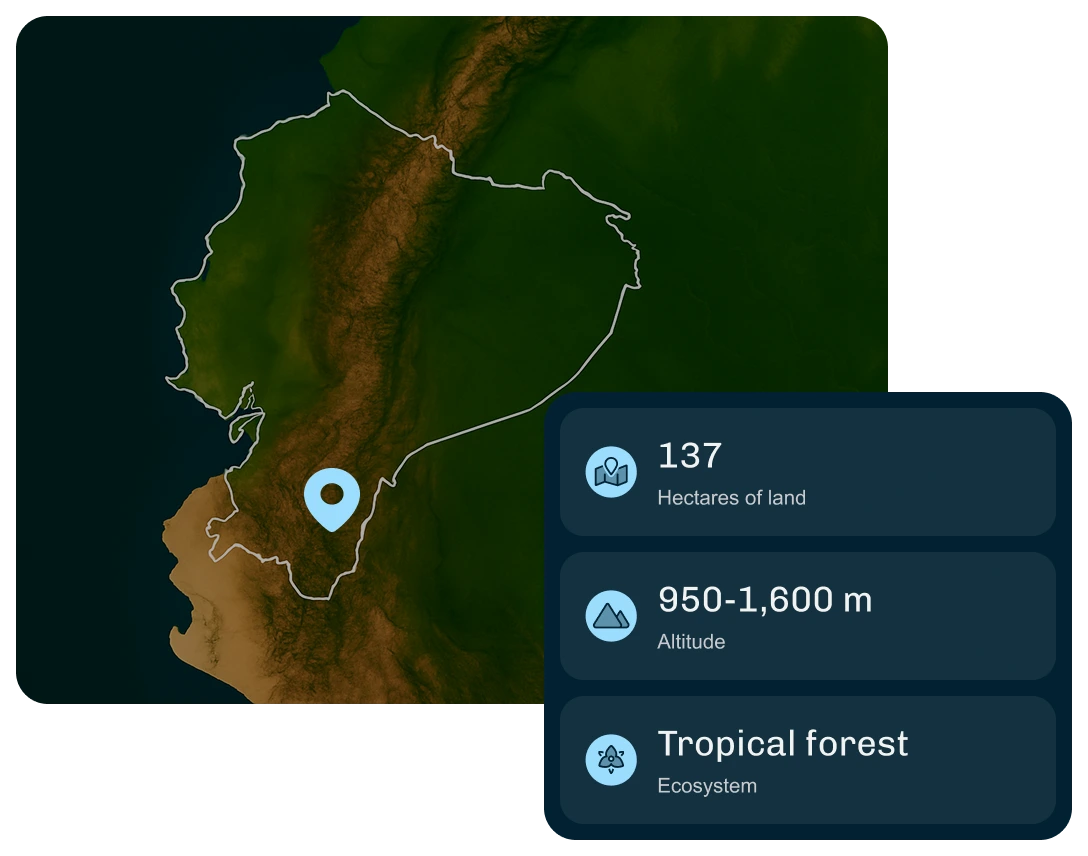
The Copalinga Reserve, located in southeastern Ecuador, protects the sub-montane forests between Zamora and Podocarpus National Park. It is a biodiversity hotspot that is threatened by deforestation and climate change.
Gallery
Stakeholders and local partners
Who are the key stakeholders?
Project Developer:


Objectives and approach
The purpose of the project is to protect a unique ecosystem and ensure safe habitats for threatened species, while strengthening research and ecotourism.


Sustainable Development Goals
Supporting this project you’re contributing to the following SDGs:



Let's talk
Book a free introductory call
Tell us about your company and your sustainability goals: one of our ESG experts will get back to you to identify the best starting point, with no commitment.
- A 30-minute call with an expert, no commitment
- We get back to you within 24 working hours
- A first concrete direction for your ESG goals
Thank you, we will be in touch
We have received your request. An ESG expert from Green Future Project Group will contact you within 24 working hours.